
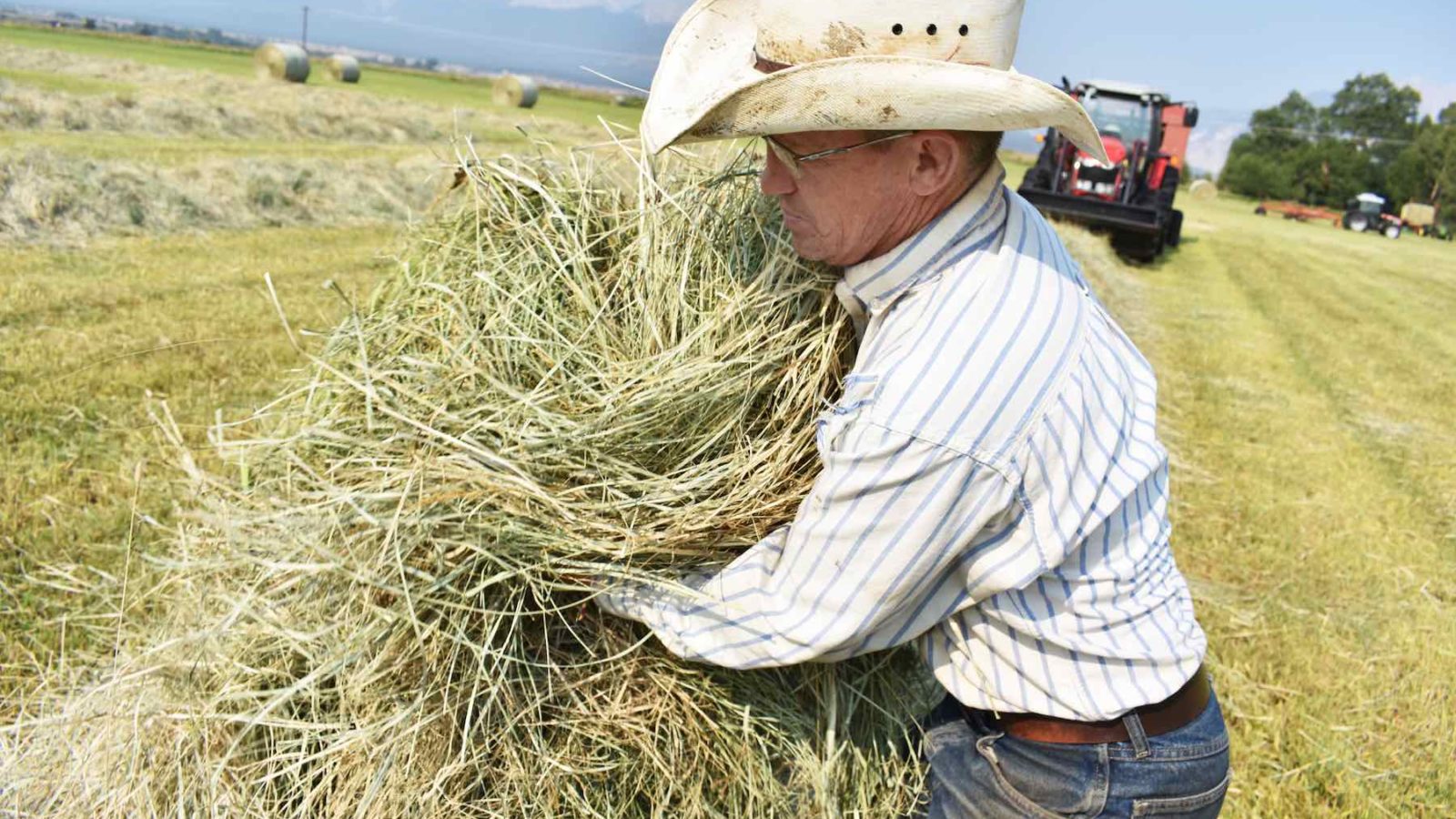
Ken McMurry has the rare privilege of never having to drive to the office or answer to a boss. And he has magnificent places to ply his family’s trade — their lands in Chaffee County and South Park. As a fifth-generation rancher, he will tell you in no uncertain terms that life is good.
But in January, his version of a busy day at the office is seeing 10 new calves on the ground. Their busiest month brings in about 300 little ones, with about 75 more trickling in over the next 60 days. So begins the yearly cycle of life.
Come May, the McMurrys and their friends move the cows and calves to summer pasture in South Park. In lieu of hauling them in trucks, they drive the cattle 20 miles over three days, careful not to exhaust the animals. And in that, there’s time for camaraderie, enjoying the outdoors on horseback and for some people, having the best days of their lives.
Throughout the summer, the McMurrys keep a constant eye on the pastures, gauging grass and water supply and moving the cattle to keep pace with their nutritional needs. Proper grazing is key; there is a balance here between overgrazing and using the cattle to work with the soil. It’s all a dance that depends largely on the whims of the high country weather.
These past few years have been tough, very dry. Many ranchers are putting up less hay than usual, meaning that some of them may have to buy hay to get through the winter. Sometimes they are forced to sell cows to compensate for feed costs, but ranchers here will tell you that is a tricky proposition: If you have cattle in the higher elevations, you need to either breed them or buy them here. Cattle brought in from lower elevations can develop a deadly version of altitude sickness.
Like most ranchers, McMurry feels the changes every day as the high country is discovered by people, who like them, can’t think of a better place to live. That is part of the reason why roughly 30 percent of Chaffee County’s agricultural lands have disappeared since the 1980s. He says he entirely understands the allure of Chaffee County. But the growing pressures affect almost every facet of rural life. He says they now hear the traffic on Highway 285 almost nonstop at their ranch in Nathrop. “It’s just people,” he says. “People on the roads, people moving in, people visiting the public lands.”
A congenial sort who takes to his mountain bike in his free time, McMurry is quick to say he doesn’t dislike the folks driving through or discovering Chaffee County. “They’re good people,” he says, quickly adding that there isn’t a ready answer for every growth-related problem in Chaffee County.
Still, driving equipment down Highway 285 to get to a hayfield has become a dicey experience. “It’s frightening,” he says. And moving cattle across the highway has become a lot more technical. There have been times in recent years when officials have told them to reschedule crossings due to traffic. It takes a scant 10 minutes to get the entire herd from one side to the other (they cross by the rafting operations and run the cattle over Fishermans Bridge), but it calls for the highway to be closed during that time. And sometimes there’s just too much traffic nowadays to make it work.
He says the vast majority of the people who have to stop their cars are in awe of what they’re seeing: a piece of the West that is increasingly hard to come by. With smartphones and looks of amazement, they often have to be coaxed back into their cars to ensure a safe and swift operation.
McMurry says that intelligent and thoughtful conversation is one of the keys to keeping local agricultural lands productive and to create understanding between ranchers and newcomers.
McMurry participated in the Envision Chaffee County process in late 2017 and in 2018 as a panelist, and says it was refreshing to have a conversation that supported ranching, as opposed to efforts in the past by groups who wanted to curtail grazing on public lands, for example. For the record, he says that without public grazing options, many ranchers couldn’t make it. They require large amounts of land for growing hay, and in the high country, that is usually a single crop per year with a short growing season.
He says there are several components of the Envision process that are very forward-thinking for the ranching community. For example, the Working Lands Helping Hands program has had an educational piece for realtors who sell rural lands.
There’s also the Growing Good Neighbors portion of the Helping Hands program, which has dispatched volunteers to ranchers who need help with the enormous task of clearing ditches in the spring. McMurry says it’s one of those chores that he least likes and that his family tends to use a backhoe for the task, but he has neighbors who have benefited greatly from the effort.
In any case, he says it’s good for people from non-ranch backgrounds to have some time on lands that comprise the disappearing American West and “to have the general public be advocates for what we do.”
It comes as little surprise when McMurry says Chaffee County’s ranchers have chosen their occupations and many of them can’t imagine doing anything else. “We do what we do almost completely because that’s what we want to do.
“And change,” he says, “it’s just a fact of life. Change will happen.”


